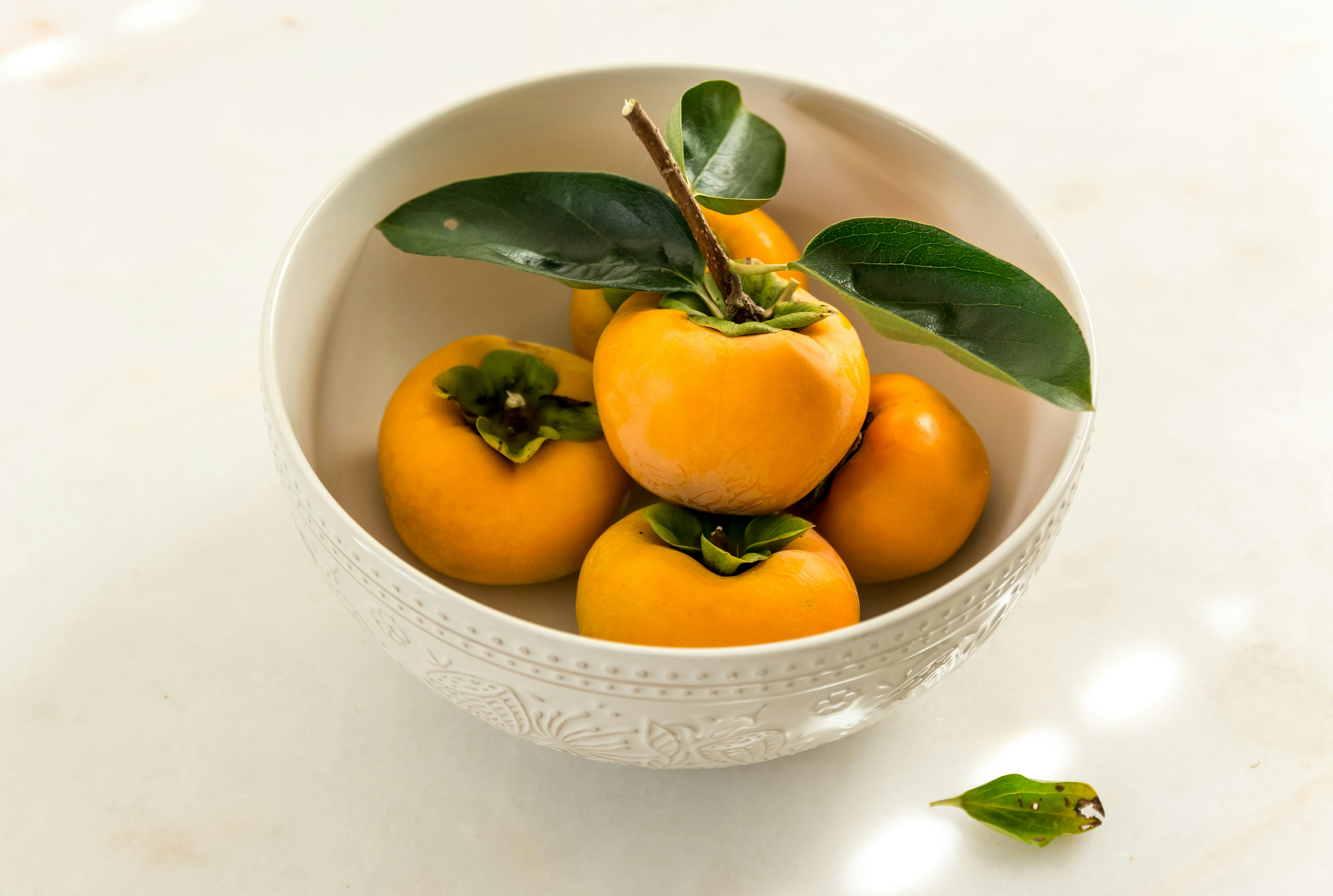
On the persimmon tree
A fruit that
demands
patience.
Diospyros kaki — Greek for “divine fruit.” The genus has been in cultivation for over two millennia. It grows quietly, asking little, and returns generously.
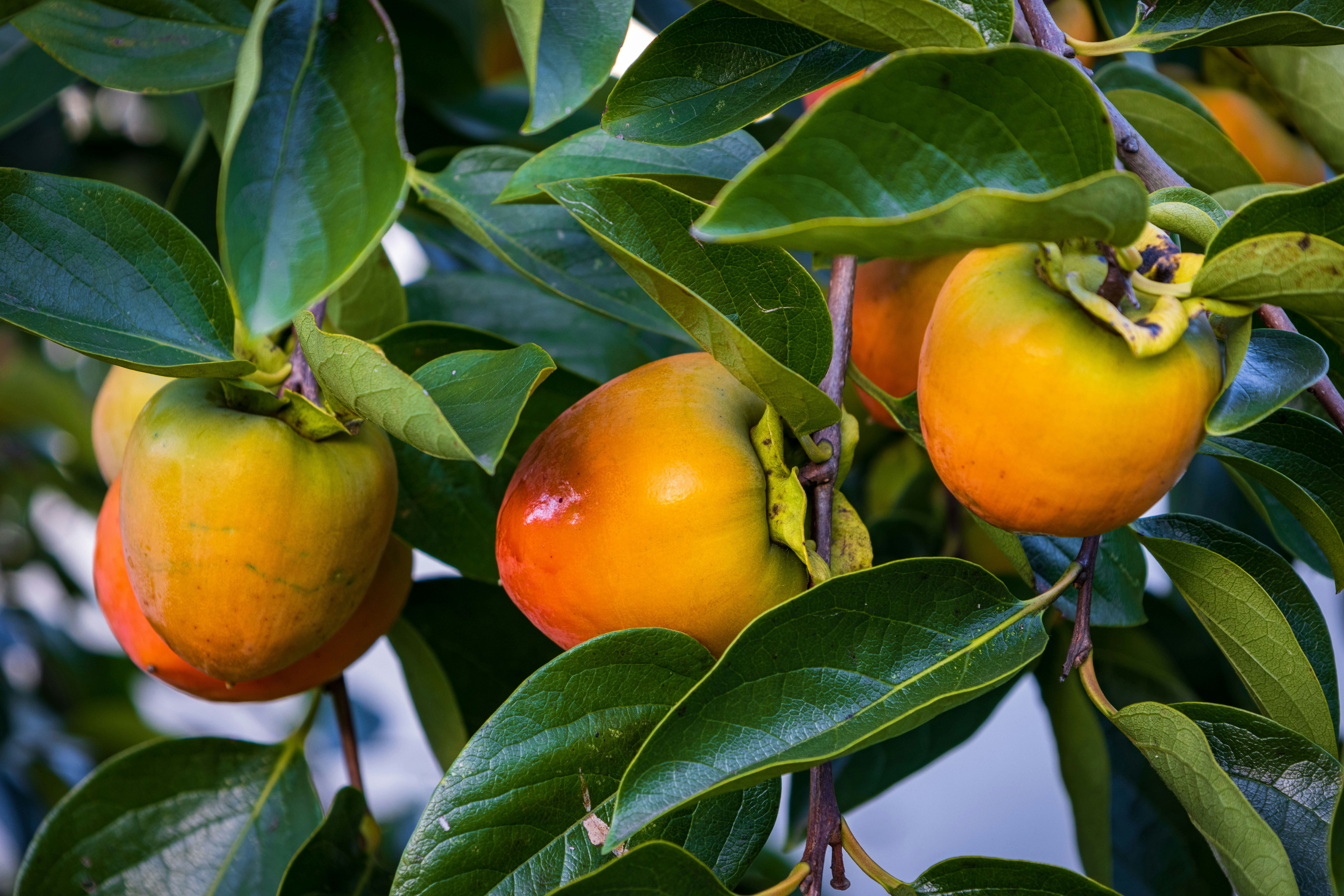
The persimmon tree occupies a peculiar place in the orchard calendar. While apple and pear growers are deep into the press house by September, the persimmon stands decorated, unhurried. Its fruit ripens when most other trees have long surrendered their leaves, often holding firm through the first frosts — which, for the Hachiya, are not an obstacle but a requirement.
“No other cultivated fruit tree carries its harvest so visibly into winter, orange against bare bark, as if the season itself refused to end.”
The species grown most widely today is Diospyros kaki, the Japanese or Asian persimmon, introduced to Western horticulture in the mid-nineteenth century. The American persimmon (Diospyros virginiana) is smaller, hardier, and native to the eastern United States, prized by foragers and natural orchard keepers.
The fundamental distinction any grower must understand is between astringent and non-astringent varieties. Astringent types — Hachiya being the best-known — contain soluble tannins that render the fruit mouth-puckering and nearly inedible until fully soft. Non-astringent varieties, of which Fuyu is the most widely planted, lose their tannins while still firm and can be eaten like an apple straight from the branch.
Persimmon trees are long-lived and deeply rooted. A well-sited specimen will establish a taproot in its first year that makes later transplanting nearly impossible. Plant where you intend to keep them — a tree planted today may bear fruit for the next hundred years.